

When to Schedule Asphalt Paving in Oklahoma City
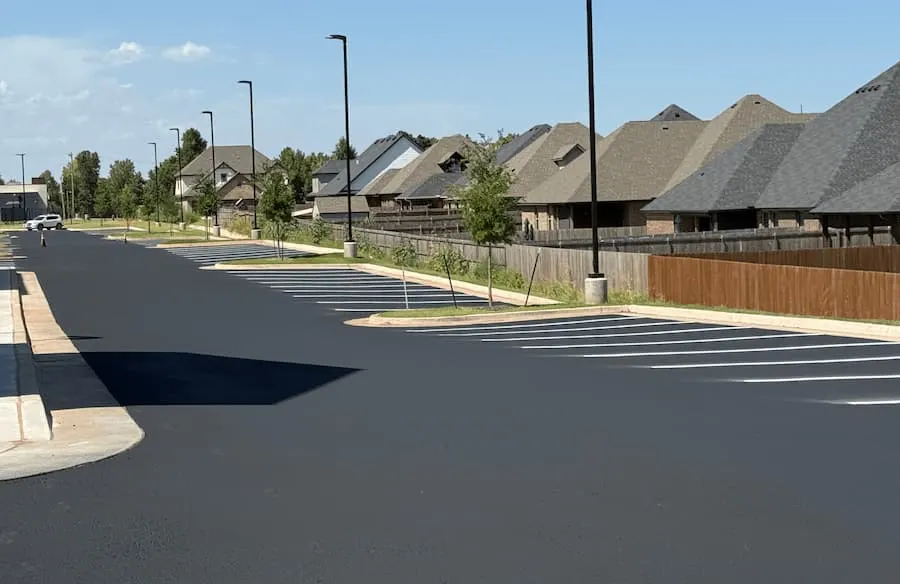
The right time for asphalt paving in Oklahoma City is a run of dry days with mild temperatures, a firm base and a site that is ready for the crew. A calendar date cannot promise any of that. We schedule around conditions, and you should treat a date as firm only once the forecast and the ground both agree.
How weather affects asphalt paving
Asphalt arrives from the plant hot and starts cooling the moment it is loaded. The crew has a limited window to spread it and then compact it, which means rolling it dense and tight while it is still warm enough to move. Cold air, a cold base, steady wind or a damp surface all shorten that window. Mix that cools too soon ends up loosely compacted, and loose asphalt ravels and breaks down early.
Moisture is the other problem. Standing water or a soaked base keeps the new layer from bonding and leaves soft ground under the rollers. A surface that looks dry on top can still be wet underneath after a few days of rain.
Why crews look at the ground first
Before any paving starts, we look at the surface and the base, which is the compacted stone or soil layer that carries the load. A pavement is only as sound as what sits under it. If the base is soft, rutted or holding water, the asphalt on top will follow it down no matter how good the weather is.
That is why the month alone does not decide a suitable window. A dry, firm site in a cool week can be better to pave than a soft one in a warm week.
Plan around access and site preparation
Many paving jobs need work before the asphalt goes down. Grading reshapes the surface so water runs off instead of pooling. Excavation removes failed material, and new base stone has to be placed and compacted. If your site needs any of this, build that time into the schedule ahead of the paving day, not on top of it.
Plan for how long the area has to stay clear. A fresh asphalt driveway usually means no vehicles for a day or more, and most crews ask for longer before heavy loads like delivery trucks or trailers. Move cars to the street or a neighbor's drive, and tell anyone who visits or makes deliveries.
For a business, access is the bigger puzzle. A parking lot can often be done in sections so customers, staff and deliveries still have a way in. Decide which entrance and which spaces matter most, and talk it through with the contractor before the work is scheduled. Resurfacing a lot in phases takes more planning but keeps the doors open.
| Job type | What to plan for |
|---|---|
| Driveway | Parking elsewhere, keeping the drive clear until the crew says it can take traffic |
| Parking lot | Phasing, signage, and a clear path for customers and deliveries |
| Resurfacing | Repairs to failed spots first, so the new layer does not copy old problems |
| Sites needing base work | Extra days for grading, excavation and stone before any asphalt is placed |
What to expect in Oklahoma City and Norman
Oklahoma winters can bring snow, ice and freeze-thaw cycles, where water in the ground freezes, expands and thaws again. That is why November and December schedules in Oklahoma City and Norman depend on the forecast and the condition of the surface. A mild, dry week can work. A week that starts with frost or a soaked yard may not.
Wet or frozen ground slows both preparation and paving. Frozen base cannot be compacted properly, and the thaw that follows can leave soft spots. Confirm conditions close to the work date instead of locking in a day weeks ahead.
The rest of the year has its own swings. Storms often build across central Oklahoma from April into June, and July and August summers usually run hot. Heat does not stop paving the way cold does, but crews may start early and work around the hottest hours. Whatever the month, leave room in the schedule for a delay and do not count on a fixed seasonal cutoff. If you have a deadline, such as a business opening or a move, start the conversation early.
What to check before choosing a date
- Walk the site after a rain. Note where water collects, and flag soft spots or areas that stay damp.
- Look for cracks, sunken areas or edges that are crumbling, since these often point to base trouble underneath.
- Ask what preparation the job needs and how long it will take.
- Ask how long the area must stay closed to vehicles and foot traffic.
- Agree on what conditions have to be met before the crew starts, and who makes the call if the forecast changes.
Check with your city about permits if your project might need one. Then compare the forecast with your contractor a few days out, and again the day before. A short phone call is cheaper than a paving day that gets wasted.
If you want a second opinion on timing, we offer a Free Estimate. We will look at the surface, talk through access and tell you what the site needs before a date goes on the calendar.
Common questions
Can asphalt be laid in cold weather?
Sometimes, but it depends on air temperature, surface temperature, wind and how fast the mix cools. A cold or frozen base makes proper compaction hard, so crews often wait for better conditions.
How long should I stay off new asphalt?
Most crews ask you to keep vehicles off for at least a day, and longer for heavy loads. Hot weather can keep the surface soft longer, so follow what your contractor tells you for your job.
Does rain delay an asphalt paving job?
Yes. Rain on the surface or a soaked base can stop the work, since new asphalt will not bond or compact well over standing water. Expect to reschedule if the ground has not dried.
Areas we serve
Our services
Have a question about your project? Call (405) 397-1972